
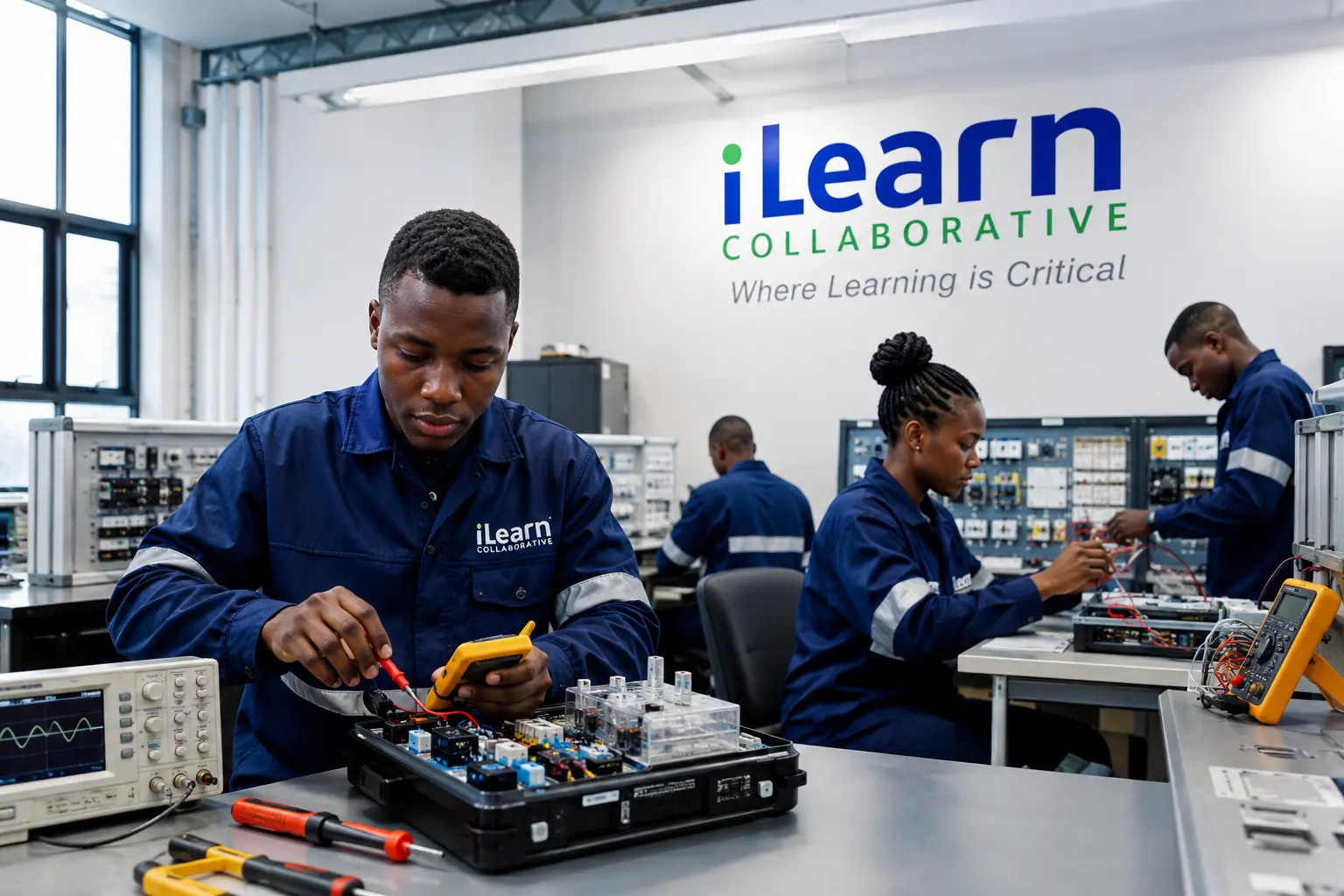
A learnership can assist a South African in gaining qualifications to boost their employment chances, plus gain experience to help with the application of what they have learned. This could support someone towards a high paying remote career if they can learn technology or other digital enabled skills.
This matters to unemployed South Africans because they may struggle to find their first job because employers want qualifications and experience.
The iLearn group has several learnership programmes, and the qualification, requirements and benefits differ per programme.
What’s different about a learnership?
A learnership is a combination of formal learning and work experience.
Instead of being fully completed in a classroom, a participant can see what an actual working environment can be like.
This helps them to apply what they have learned in terms of communication, teamwork, problem solving and behaviour in the workplace.
That can be critical for someone at the start of their career as they apply for their first job.
A qualification is a great foundation
iLearn offers learnerships that lead to qualifications under South Africa’s formal qualifications framework.
One of these is its IT Technical Support NQF Level 4 programme.
Technology related qualifications can be a good way to support someone with a digital career, but they should understand that the qualification does not automatically qualify them for every technology position.
The right career path depends on which qualification they complete, their skills, their experience and the requirements of individual employers.
Can a learnership help you pursue high paying remote careers?
Remote employment has been a new opportunity for people with the right skills that can be delivered digitally.
For South Africans interested in high paying remote jobs, technology and IT can be a potential career path where the nature of the work allows some roles to be completed remotely.
An IT learnership can give someone the foundation to further develop their skills in technical support and other digital roles.
You can also visit our Whatsapp Channel For More Opportunities Update
However, they should understand that a remote job or high-paying salary is not guaranteed.
Remote work depends on the occupation, employer, experience, technical capabilities and whether the specific position is designed for remote or hybrid working.
The learnership should simply be seen as one step in developing their career profile.
Unemployed learners can be supported financially
Some iLearn learnership programmes offer a monthly stipend for eligible unemployed learners.
This can help with some of the costs of participating the learnership.
The amount and conditions may not be the same across programmes, so they should check the advertisement before applying.
A stipend is also not a permanent salary, so a learner should not expect completion of the programme to guarantee employment.
Workplace experience will set you apart
A big advantage of a learnership is the opportunity to gain practical experience.
A person applying for their first job may have a qualification but little evidence of how they have applied their skills in a professional environment.
Workplace exposure can help to address that gap.
During a learnership, they can see the systems in the workplace and learn how to communicate and operate in line with the procedures and apply their training.
This can be included as their experience on their CV for job applications.
iLearn uses a blended learning approach
iLearn refers to its learning approach as a blend, combining different approaches to deliver the training.
Depending on the programme, a learner can experience a mix of classroom instruction, digital learning and practical application.
This can be a good strategy for learners wanting to develop digital confidence as they may interact with technology as part of the learning process.
Applicants should nevertheless check the delivery structure for the programme they are interested in and the attendance requirements and the workplace component.
Employers benefit from developing skilled workers
The benefits of learnerships extend both ways.
Employers can use learnerships to develop people that have the skills they require.
A business can give an individual practical exposure while seeing them in action in a real workplace.
This can also help employers to develop a talent pipeline as an alternative to external recruitment.
For learners, exposure to an employer can be useful even if there is no permanent position available at the end of the programme.
Employers may receive tax and B-BBEE benefits
iLearn also outlines potential benefits for employers participating in learnership programmes, including tax incentives and skills-development-related B-BBEE benefits, subject to the applicable rules and the circumstances of the employer.
These should not be interpreted as automatic financial incentives.
Businesses should confirm the current legal and tax requirements and obtain appropriate professional advice before making decisions based on potential incentives.
B-BBEE recognition can also depend on the specific circumstances and applicable codes or requirements.
Building skills for future digital work
For people interested in remote careers, it is useful to think beyond simply finding a job that can be done from home.
Remote employers still require people with skills that will produce measurable results.
Depending on the career, this may include technical knowledge, communication, problem solving, digital literacy, customer service or specialised professional expertise.
A learnership can help to develop some of these foundations, but learners may need additional qualifications, certifications and experience as they develop their career.
How learners can get the most from an iLearn programme
Being accepted into a learnership is only the first step.
They should focus on getting as much practical experience as possible while they are in the programme.
Useful steps include:
Take the classroom component seriously.
Develop strong communication and teamwork skills.
Ask questions during workplace training.
Keep evidence of tasks and skills you have acquired during the programme.
Build professional relationships with colleagues and supervisors.
Keep copies of certificates and relevant programme documents.
Update your CV as you gain experience.
Continue developing your technical or professional skills after completing the programme.
These steps can help to transform a learnership into a career development plan.
What applicants should check before applying
Not every iLearn learnership has the same requirements.
They should check things like:
Qualification: Find out exactly what the qualification the programme offers.
Entry requirements: Confirm the required education level and any other eligibility conditions.
Duration: Establish how long the programme will take.
Workplace placement: Check whether practical workplace experience forms part of the programme and where it will be delivered.
Stipend: Confirm whether financial support is offered and the conditions attached to it.
Application deadline: Submit your application before the advertised closing date.
Accreditation: Verify the qualification and training arrangements associated with the specific programme.
A learnership is not a guaranteed route to employment
It is important for applicants to have realistic expectations.
Completing a learnership can give a qualification, practical exposure and skills, but it does not guarantee a permanent position.
The same applies to remote employment.
A learner may develop skills that are relevant to digitally enabled careers, but securing a remote position will depend on the requirements of the employer and the candidate’s overall skills and experience.
For this reason, they should see the programme as a foundation rather than an automatic job offer.
Why this pathway can matter to South African youth
For an unemployed young person, getting a qualification and practical experience can be difficult without access to a structured programme.
A learnership can give them a chance to combine the two.
For learners interested in technology, this can open them up to a start in developing their skills for jobs in digital, hybrid or remote roles.
The journey towards high paying remote careers typically requires more than completing one programme.
Continuing learning, gaining practical experience and developing specialisations skills can become increasingly important as a person progresses in their career.
Source
Source: iLearn, including information on its learnership programmes, workplace learning, blended training approach and employer-related benefits.
Editorial policy
This article was independently written for South African readers using iLearn’s published information as the factual basis.
It aims to provide helpful career information rather than reproducing promotional materials.
Programme requirements, qualifications, stipends, duration and availability can differ between individual learnerships.
Where specific details were not confirmed, they have not been added.
Disclaimer
An iLearn learnership does not guarantee permanent employment, a remote job or a high salary.
Career outcomes depend on the qualification, skills, workplace experience, employer requirements and available vacancies.
Prospective applicants should verify the latest details of the specific programme directly with iLearn or the relevant programme administrator before applying.
Applicant awareness
South Africans searching for learnerships and remote career opportunities should be aware of fraudulent advertisements.
Do not pay individuals who promise guaranteed employment, admission or placement. Verify the organisation and application process with an official source before providing identity documents, banking information or other personal details.
