Edge Training Learnerships 2026: Salary, Monthly Stipend, Requirements and How to Apply
Introduction
As South Africa continues to tackle high unemployment and critical skills shortages, accredited learnership programmes remain one of the most effective pathways into meaningful employment. Among the organisations helping to bridge the gap between education and the workplace is Edge Training, which offers industry-focused training designed to equip learners with practical experience and nationally recognised qualifications.
The Edge Training Learnerships 2026 are expected to attract interest from unemployed youth, school leavers, graduates, and individuals seeking to improve their employability through structured workplace learning. These programmes combine classroom-based education with practical on-the-job training, enabling participants to develop both technical knowledge and workplace skills.
While learnership opportunities and funding may vary throughout the year, candidates who meet the eligibility requirements can benefit from recognised qualifications, valuable work experience, and, in many cases, a monthly stipend to help cover basic expenses during training.
This guide explains how the programme works, who can apply, what benefits learners may receive, and how to prepare a strong application.
Key Highlights
- Accredited learnership programmes linked to nationally recognised qualifications.
- Combines classroom learning with practical workplace experience.
- Opportunities across different industries depending on employer partnerships.
- Monthly stipend may be available for qualifying learners.
- Suitable for unemployed South Africans looking to improve employability.
- Practical skills aligned with industry needs.
- Applications open throughout the year depending on programme availability.
What Are Edge Training Learnerships?
Edge Training is a South African training provider focused on skills development, workplace learning, and accredited education programmes aligned with the National Qualifications Framework (NQF).
Its learnership programmes are designed to help participants gain both theoretical knowledge and practical workplace experience. Successful learners may complete an accredited qualification while building skills that employers value.
Rather than simply attending classroom sessions, learners participate in real workplace environments where they apply what they have learned under supervision. This combination of education and work experience is one of the defining features of the South African learnership system.
Purpose of the Learnership Programme
The programme supports several national objectives, including:
- Developing industry-relevant skills.
- Improving youth employment opportunities.
- Helping employers build a skilled workforce.
- Supporting transformation and workplace inclusion.
- Providing recognised qualifications that improve career prospects.
For many participants, a learnership serves as their first experience in formal employment, making it an important stepping stone toward long-term career development.
Available Learnership Programmes
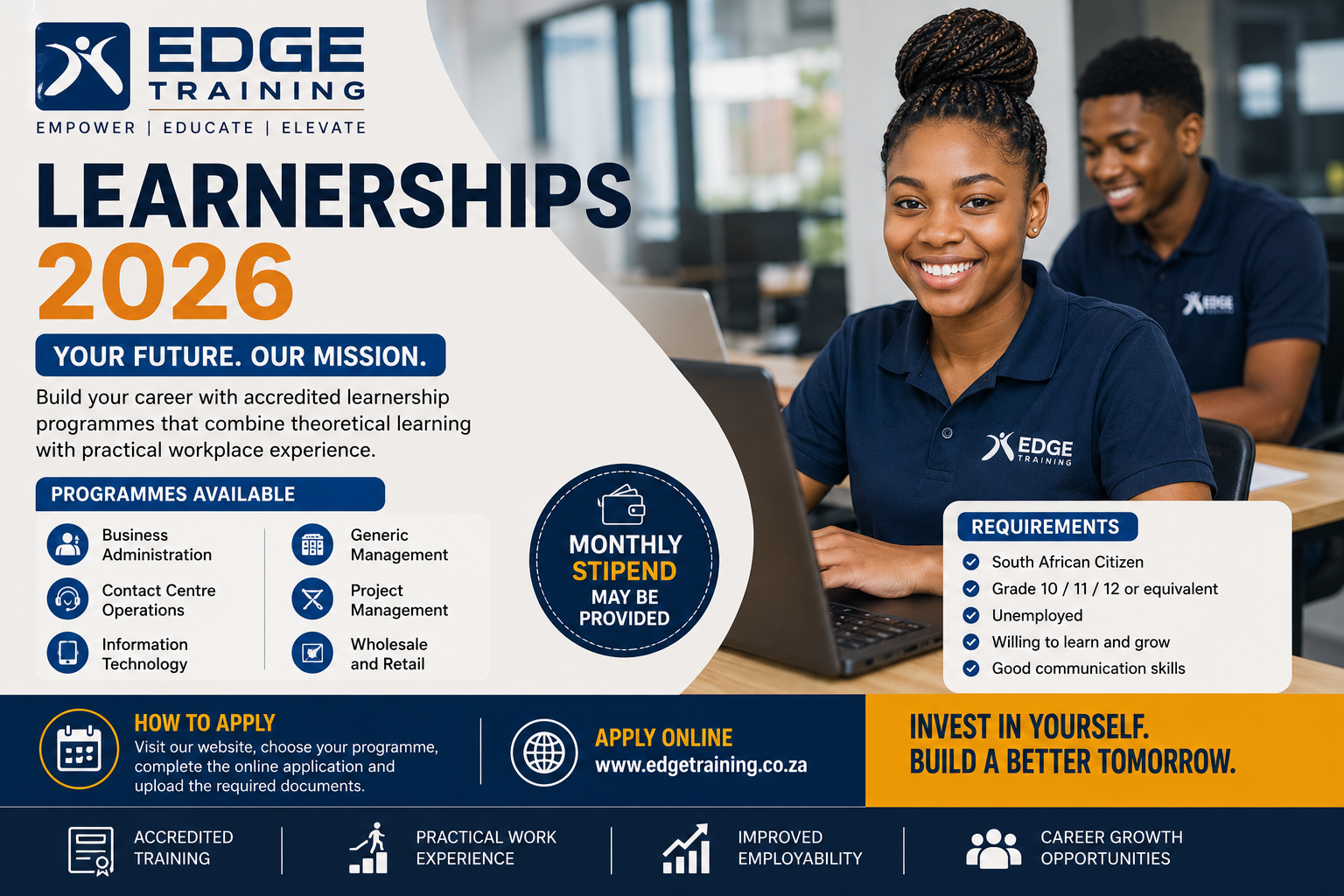
The specific programmes available through Edge Training may vary depending on employer demand, funding, and industry partnerships. Typical areas of training may include:
Business Administration
Learners develop office administration, communication, record-keeping, and customer service skills suitable for administrative careers.
Contact Centre Operations
Training focuses on customer support, call centre systems, communication techniques, and service excellence.
Generic Management
This programme introduces leadership, planning, team management, and business operations for aspiring supervisors and managers.
Information Technology
Selected IT programmes may include technical support, systems administration, or digital skills relevant to modern workplaces.
Project Management
Participants learn planning, scheduling, budgeting, and project coordination techniques applicable across many industries.
Wholesale and Retail
Retail-focused programmes prepare learners for careers in sales, merchandising, stock control, and customer service.
Programme availability differs throughout the year, and not every qualification is offered during every intake.
Eligibility and Minimum Requirements
Applicants should carefully review the requirements for each advertised learnership before applying.
Educational Requirements
Typical requirements may include:
- Grade 12 (Matric) for many programmes.
- Some programmes may accept Grade 10 or Grade 11.
- Relevant post-school qualifications where specified.
- Basic English literacy.
- Basic numeracy skills.
Certain programmes may require computer literacy or subject-specific knowledge.
General Requirements
Applicants are generally expected to:
- Be South African citizens.
- Hold a valid South African ID.
- Be unemployed when applying (where specified).
- Be willing to complete both classroom and workplace training.
- Demonstrate commitment to completing the programme.
- Meet the specific entry requirements of the advertised learnership.
Some employer-funded programmes may include additional criteria based on operational needs.
Monthly Stipend and Financial Support
One of the most common questions prospective learners ask concerns financial assistance.
Many learnerships in South Africa provide a monthly stipend rather than a salary. The stipend is intended to help learners cover transport, meals, and other basic costs while completing the programme.
However, it is important to understand that:
- Stipend amounts vary by programme.
- Funding depends on the employer or sponsoring organisation.
- Not every learnership offers the same financial support.
- Payments are generally not equivalent to full-time employment salaries.
Applicants should always refer to the official vacancy advertisement for confirmed stipend information before submitting an application.
Benefits of Participating
Completing an accredited learnership offers several advantages beyond financial support.
Nationally Recognised Qualification
Successful learners receive qualifications aligned with the National Qualifications Framework, improving future employment prospects.
Workplace Experience
Many employers value practical experience just as highly as academic qualifications.
Improved Employability
Candidates with accredited workplace learning often become more competitive in the job market.
Professional Development
Learners develop communication, teamwork, problem-solving, and organisational skills.
Industry Exposure
Working alongside experienced professionals helps participants understand employer expectations and workplace culture.
Why Learnerships Matter in South Africa
South Africa continues to experience one of the highest youth unemployment rates globally.
Learnerships play a significant role in addressing this challenge by:
- Reducing the gap between education and employment.
- Helping employers develop skilled workers.
- Supporting economic participation.
- Improving workforce readiness.
- Increasing access to recognised qualifications.
Government-supported skills development initiatives have encouraged employers and accredited providers to expand workplace learning opportunities across numerous industries.
Although completing a learnership does not guarantee permanent employment, many employers use learnerships as a recruitment pathway for future staff.
How to Apply
Applications generally follow a structured process.
Step 1: Monitor Official Vacancies
Check the official Edge Training website and recognised recruitment platforms for current learnership opportunities.
Step 2: Review Programme Requirements
Read all eligibility criteria carefully before applying.
Step 3: Prepare Your Documents
Applicants commonly require:
- Updated CV
- Certified South African ID
- Certified educational certificates
- Proof of residence (if requested)
Additional documents may be requested depending on the programme.
Step 4: Complete the Application
Submit the completed application according to the instructions provided in the official advertisement.
Step 5: Attend Assessments
Shortlisted candidates may be invited to complete interviews, aptitude assessments, or screening processes.
Common Mistakes Applicants Should Avoid
Many applications are unsuccessful because of avoidable errors.
Common mistakes include:
- Submitting incomplete forms.
- Missing supporting documents.
- Providing incorrect contact details.
- Applying after the deadline.
- Failing to meet minimum requirements.
- Using outdated CVs.
Review every application carefully before submission.
Expert Analysis
Career specialists consistently recommend accredited learnerships for individuals with limited work experience.
Unlike short training courses, learnerships provide recognised qualifications combined with practical workplace exposure. Employers often view this combination favourably because learners graduate with both theoretical understanding and practical skills.
Applicants should also be cautious of recruitment scams. Legitimate accredited learnership providers generally do not request payment to apply for advertised opportunities.
Always verify vacancy information through official sources before sharing personal information.
Frequently Asked Questions
Who can apply for Edge Training Learnerships?
South African citizens who meet the advertised programme requirements may apply.
Is previous work experience required?
Most entry-level learnerships do not require previous work experience.
How long do learnerships last?
Many programmes run for approximately 12 months, although durations vary.
Do learners receive a salary?
Most qualifying programmes provide a monthly stipend rather than a full salary.
Are qualifications nationally recognised?
Yes, accredited learnerships are generally aligned with the National Qualifications Framework.
Can graduates apply?
Some programmes accept graduates, while others target school leavers. Always review the eligibility requirements.
Does completing a learnership guarantee employment?
No. While employability often improves, permanent employment is not guaranteed.
How are successful applicants contacted?
Shortlisted applicants are usually contacted by phone or email.
What documents are normally required?
An updated CV, certified ID, educational certificates, and any additional documents listed in the vacancy advertisement.
Where can I find official vacancies?
Official opportunities are typically advertised through Edge Training’s recruitment channels and recognised South African job platforms.
Conclusion
The Edge Training Learnerships 2026 represent a valuable opportunity for South Africans seeking practical workplace experience, recognised qualifications, and improved career prospects. By combining structured learning with real-world experience, these programmes help participants develop skills that align with employer expectations across a range of industries.
Prospective applicants should carefully review the requirements for each advertised programme, prepare all supporting documents in advance, and apply only through official recruitment channels. While stipend amounts and programme offerings may vary, an accredited learnership can provide a solid foundation for future employment and professional growth.
Reliable Sources and References
- Edge Training Official Website
- Department of Higher Education and Training (DHET)
- Quality Council for Trades and Occupations (QCTO)
- South African Qualifications Authority (SAQA)
Author Expertise
This article was prepared by the Careers & Skills Development Editorial Team, which researches South African learnerships, employment opportunities, accredited training programmes, and workforce development initiatives. Information is compiled from official sources and industry guidance to help readers make informed career decisions.
Editorial Transparency
This article is published for informational purposes only and is based on publicly available information from official organisations and accredited training providers. We are not affiliated with Edge Training and do not accept applications on its behalf. Readers should verify programme details, eligibility requirements, and application deadlines directly with the official provider before applying.