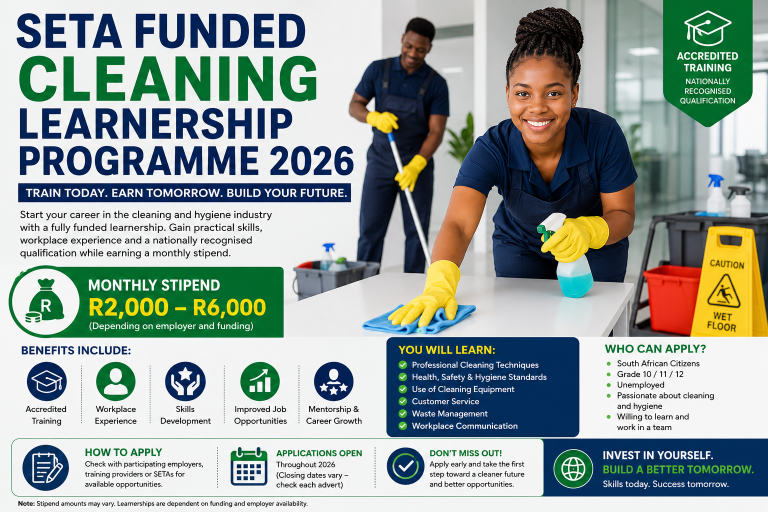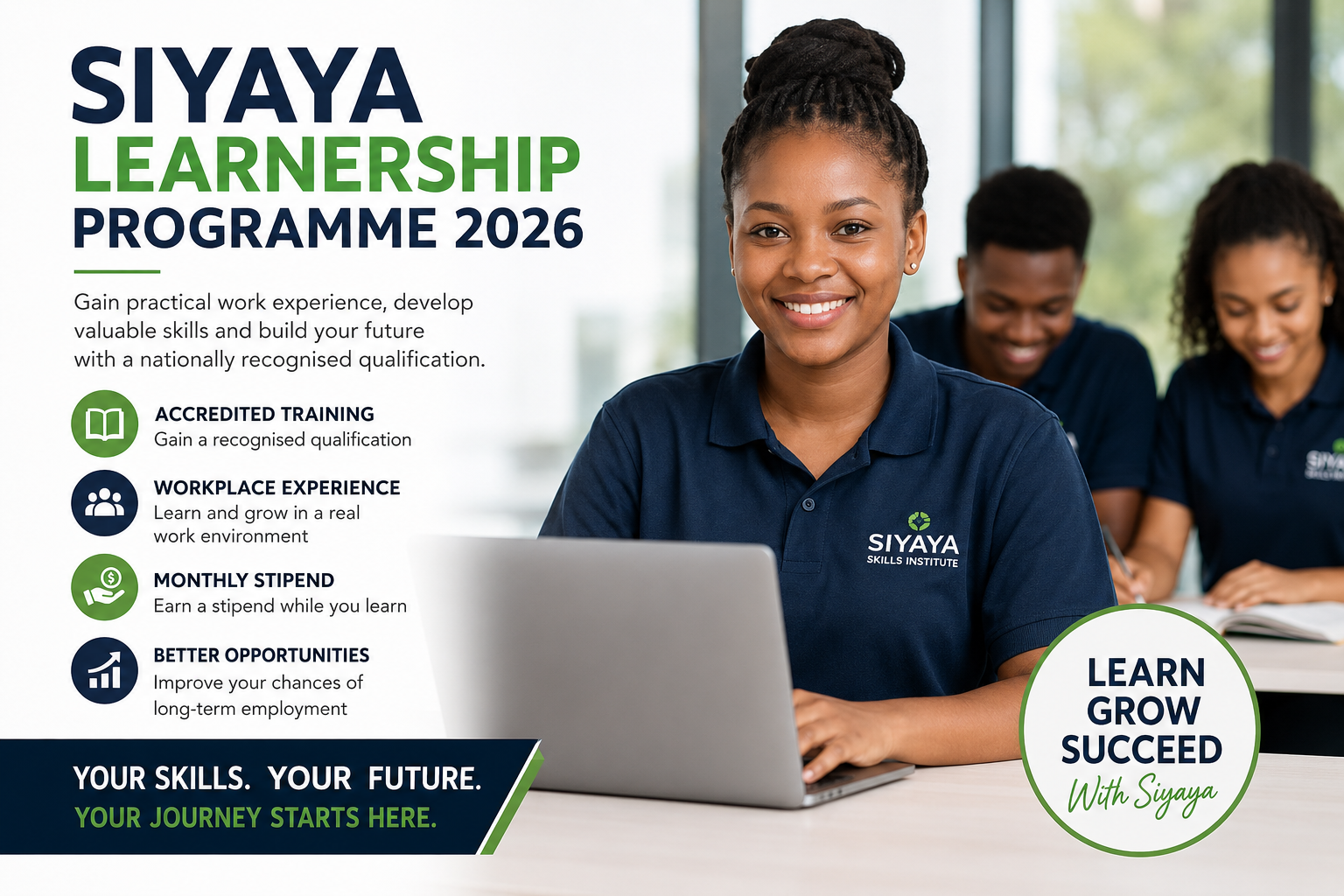
Siyaya Learnership Programme 2026 Creates New Skills and Career Opportunities for Unemployed South African Youth
Siyaya Learnership Programme 2026: A Complete Guide to Eligibility, Benefits, Application Process, and Career Opportunities
Introduction
South Africa continues to face high youth unemployment, making learnership programmes one of the most effective ways for young people to gain practical work experience while earning a monthly stipend. The Siyaya Learnership Programme 2026 is expected to attract thousands of applicants looking to develop workplace skills, improve employability, and earn a nationally recognised qualification.
Learnerships combine structured classroom training with practical workplace experience, allowing participants to gain valuable knowledge while preparing for long-term employment. Whether you have recently completed Grade 12 or are looking to build new skills, the Siyaya Learnership Programme could become an important stepping stone toward your future career.
This guide explains everything prospective applicants should know, including eligibility requirements, expected benefits, the application process, and tips to improve your chances of success.
What Is the Siyaya Learnership Programme?
The Siyaya Learnership Programme is a structured skills development initiative designed to help unemployed South Africans gain practical work experience while studying toward an accredited qualification.
Unlike short courses, learnerships combine:
- Workplace training
- Formal classroom learning
- Practical assessments
- Nationally recognised qualifications (depending on the programme)
Participants receive mentoring from experienced professionals while building the technical and workplace skills employers value.
Why Learnerships Matter in South Africa
Youth unemployment remains one of South Africa’s biggest economic challenges. Employers increasingly seek candidates who possess both qualifications and practical work experience.
Learnership programmes help bridge this gap by offering:
- Real workplace exposure
- Industry-specific training
- Professional development
- Improved employability
- Opportunities for permanent employment
Many organisations recruit successful learners into permanent positions once programmes have been completed successfully.
Expected Fields of Training
Although available programmes may differ depending on business needs, Siyaya learnership opportunities often include sectors such as:
- Business Administration
- Customer Service
- Office Administration
- Finance Support
- Human Resources
- Information Technology
- Supply Chain
- Retail Operations
- Contact Centre Services
- Project Administration
Available fields may change each recruitment cycle.
Expected Minimum Requirements
Applicants are generally expected to meet requirements similar to other South African learnership programmes.
Typical eligibility may include:
- South African citizen
- Valid South African ID
- Grade 12 (Matric) or relevant qualification
- Currently unemployed
- Good communication skills
- Willingness to learn
- Basic computer literacy for administrative programmes
- Ability to work well in a team
Some specialised learnerships may require additional qualifications or subject passes.
What Participants Can Expect
Successful learners typically receive:
- Accredited training
- Practical workplace experience
- Mentorship
- Workplace coaching
- Industry exposure
- Career development
- National qualification upon successful completion
- Monthly learner stipend (where applicable)
The exact stipend amount depends on the employer, SETA funding, and programme requirements.
Benefits of Joining the Siyaya Learnership Programme
One of the greatest advantages of participating in a learnership is the opportunity to gain practical experience while continuing your education.
Key benefits include:
Workplace Experience
Many graduates struggle because they lack practical experience. Learnerships help solve this challenge by placing participants in real working environments.
Industry Qualification
Most learnerships lead to qualifications registered on the National Qualifications Framework (NQF), improving future employment opportunities.
Monthly Financial Support
Most funded learnerships provide participants with a monthly stipend to assist with transport and daily expenses during training.
Professional Development
Participants also develop valuable soft skills including:
- Communication
- Teamwork
- Time management
- Customer service
- Problem-solving
- Professional workplace behaviour
How the Selection Process Usually Works
Recruitment processes often include:
- Online application
- Document verification
- Shortlisting
- Interviews
- Assessments (where applicable)
- Final selection
- Signing of learnership agreement
Only shortlisted candidates are usually contacted.
Documents You May Need
Applicants should prepare certified copies of:
- South African ID
- Grade 12 certificate
- Updated CV
- Proof of residence (if requested)
- Additional qualifications
- Driver’s licence (where applicable)
Having documents ready before applications open can improve the application process.
Tips to Improve Your Chances
Competition for learnerships is often extremely high.
To strengthen your application:
- Keep your CV updated.
- Use a professional email address.
- Ensure all information is accurate.
- Submit your application before the closing date.
- Include certified supporting documents where requested.
- Apply only if you meet the minimum requirements.
Avoid submitting multiple duplicate applications unless specifically instructed.
Career Opportunities After Completion
Completing a learnership can open pathways into various careers, including:
- Administrative Assistant
- Customer Service Consultant
- Office Administrator
- Human Resources Assistant
- Receptionist
- Data Capturer
- Retail Supervisor
- Finance Clerk
- Contact Centre Agent
- Operations Assistant
While employment is not guaranteed, many employers value candidates who have successfully completed accredited workplace training.
Why Employers Value Learnership Graduates
Employers often prefer candidates with practical workplace experience because they already understand:
- Workplace communication
- Team collaboration
- Company procedures
- Professional ethics
- Time management
- Customer interaction
These skills reduce onboarding time and increase productivity.
Important Application Advice
Always apply only through official recruitment channels.
Applicants should be cautious of scams requesting payment for:
- Application forms
- Interviews
- Job placement
- Training fees
Legitimate learnership programmes generally do not charge application fees.
Apply here:
Siyaya Learnership Applications Portal
Frequently Asked Questions
Is the Siyaya Learnership paid?
Most funded learnerships provide a monthly stipend, although the amount varies depending on the programme and funding.
Can unemployed youth apply?
Yes, many learnerships are specifically designed for unemployed South African citizens who meet the eligibility criteria.
Is previous work experience required?
Most entry-level learnerships do not require previous work experience.
Does completing the programme guarantee employment?
No. Completion improves employability but does not guarantee permanent employment.
Expert Insight
South Africa’s labour market increasingly rewards practical skills alongside academic qualifications. Learnerships supported by employers and Sector Education and Training Authorities (SETAs) remain among the most accessible routes for young people entering industries such as administration, finance, retail, logistics, and customer service. Candidates who combine accredited training with strong communication and digital skills are often better positioned to compete for entry-level roles.
Conclusion
The Siyaya Learnership Programme 2026 offers aspiring professionals an opportunity to gain valuable workplace experience while working toward a recognised qualification. For unemployed South Africans seeking to improve their career prospects, programmes like these can provide practical skills, industry exposure, and a stronger foundation for future employment.
Prospective applicants should monitor official announcements carefully, prepare their documents in advance, and submit applications only through verified channels when the programme opens.
Publishing Transparency
Author: Editorial Careers Team
Last Updated: July 2026
Content Type: Career and Learnership Information Guide
Editorial Policy: This article is intended for informational purposes. Application requirements, programme availability, stipends, locations, and closing dates may change. Readers should verify all information through the official Siyaya recruitment or training provider before applying.
Sources and References
- South African Department of Higher Education and Training (DHET)
- Quality Council for Trades and Occupations (QCTO)
- National Qualifications Framework (NQF)
- Relevant Sector Education and Training Authorities (SETAs)
- Official Siyaya recruitment announcements (when published)